
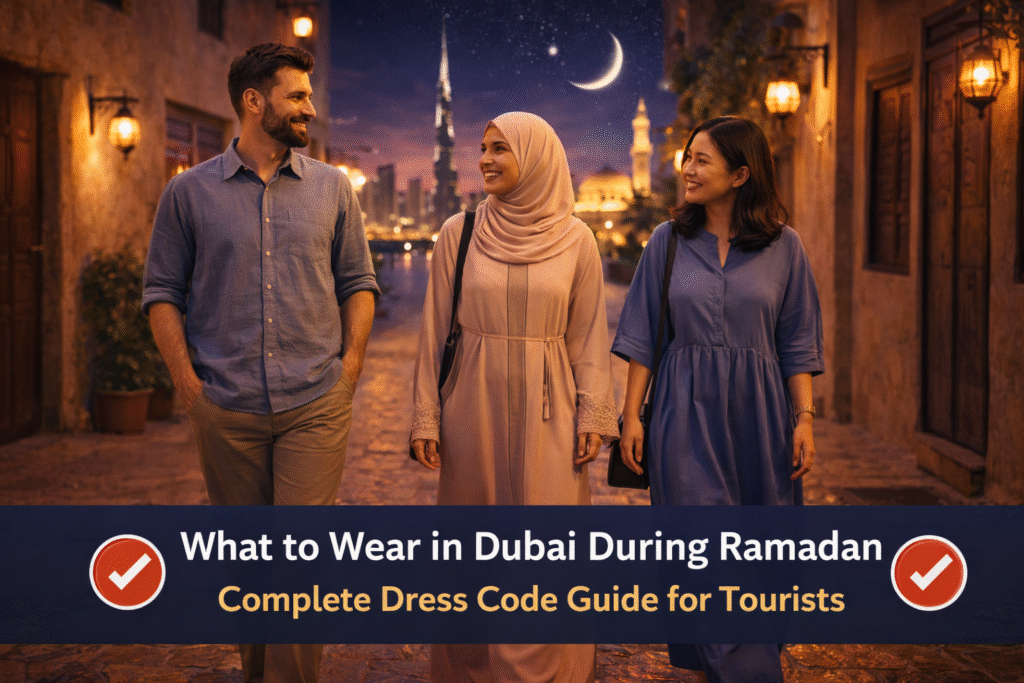
Your Dubai trip is booked. Then you realize it falls during Ramadan. Suddenly, you’re awake at 2 AM Googling whether you need to buy an abaya. Your suitcase is open. Nothing looks right anymore. Can you wear shorts? Do tank tops get you arrested? Will your beach vacation turn into a fashion disaster?
Let me save you the stress. I’m going to tell you exactly what to wear in Dubai during Ramadan without the confusion or panic.
The Short Answer You’re Looking For
During Ramadan, tourists should dress more modestly in public spaces by covering their shoulders and knees. You don’t need to wear traditional Islamic clothing like abayas or kanduras. Regular clothes that aren’t revealing work perfectly fine. Beaches and hotel pools still allow normal swimwear. The dress code applies mainly to public areas like malls, streets, and souks.
That’s the basic rule. Now let’s break down what this actually means for your wardrobe.
Why Dress Codes Matter More During Ramadan
Dubai balances modern tourism with Islamic tradition year-round. During Ramadan, the city shifts slightly toward its cultural roots. The holy month calls for reflection, spirituality, and respect. Ramadan is marked by peaceful self-reflection and increased devotion for Muslims.
Dress codes during Ramadan aren’t about being strict with tourists. They’re about showing respect while millions of people fast and pray. Think of it like dressing appropriately for a church, temple, or any sacred space. You wouldn’t wear a bikini to Sunday mass, right? Same principle here.
The rules apply to everyone in public spaces. Muslims and non-Muslims. Residents and tourists. Men and women. Nobody gets a free pass during Ramadan.
What Women Should Actually Wear
Let’s get specific because vague advice helps nobody.
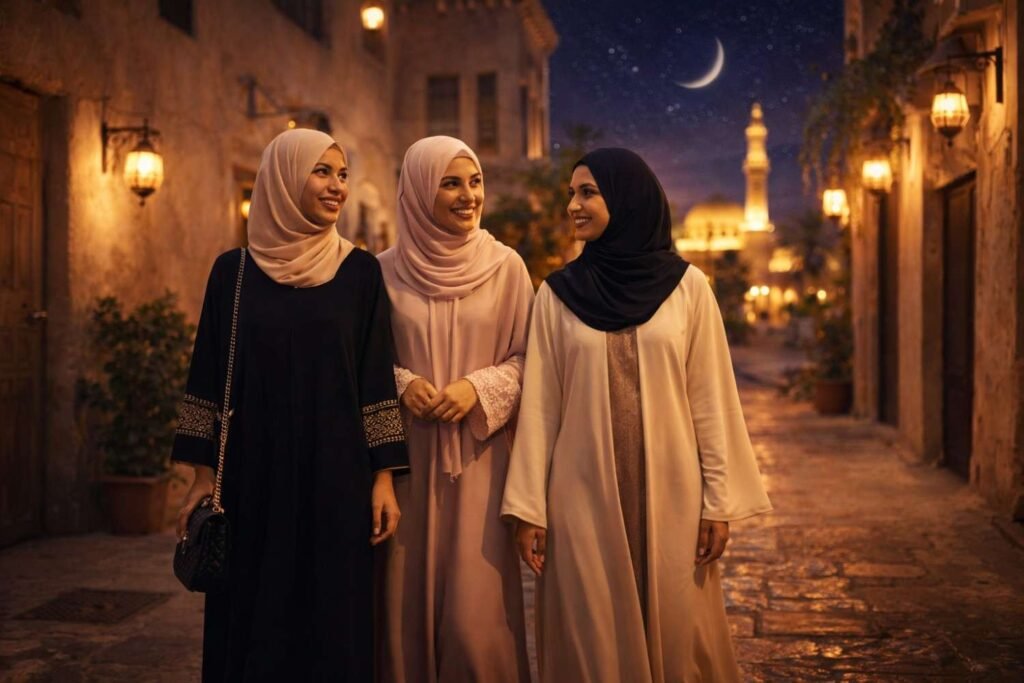
For malls and shopping areas: Your shoulders need coverage. Sleeveless tops and tank tops should stay in your hotel room during the day. Choose t-shirts, blouses with sleeves, or light cardigans over sleeveless dresses.
Your knees need coverage too. Maxi dresses or modest blouses paired with long skirts work beautifully. Midi dresses hit the perfect length. Pants are always fine. Longer shorts that reach near the knee can work, though full-length options are safer.
Cleavage should stay covered. Low-cut tops and revealing necklines don’t belong in public during Ramadan. Save them for evenings at your hotel restaurant or bar.
For traditional markets and souks: Dresses should fully cover shoulders and clothes must not be above the knees. These areas are more conservative than modern malls. Loose-fitting clothes work better than tight, body-hugging outfits.
Long skirts or pants pair well with modest tops. Bring a light scarf if you plan to visit heritage areas. You don’t need to cover your hair in souks, but having a scarf handy gives you options.
For mosques and religious sites: It is compulsory for women to cover their arms, legs and hair when entering mosques. Most mosques provide abayas and headscarves for visitors. Wearing your own loose, ankle-length dress or pants with a headscarf also works.
Your outfit should be loose-fitting, not body-hugging. Thick fabrics work better than see-through materials. Cover everything from wrists to ankles, plus your hair.
For hotels and resorts: Your hotel is your relaxation zone. Dress codes relax significantly inside hotel properties. Sleeveless tops and shorter skirts work fine for hotel restaurants and lounges. Nobody will bother you about showing shoulders at your hotel bar.
Room service means you can wear whatever you want in your room. Order breakfast in your pajamas. Nobody cares.
For beaches and pools: Normal swimwear is perfectly acceptable at beaches and pools during Ramadan. Bikinis, one-pieces, swim trunks, whatever you’d normally wear works fine. The rules about modesty don’t apply when you’re actually swimming.
The key is bringing a cover-up for walking to and from the beach or pool. Throw on a dress, shorts, or sarong when you leave the water. Don’t walk through hotel lobbies in just a bikini. That’s the only real restriction.
What Men Should Pack and Wear
Men have it easier, but rules still apply during Ramadan.
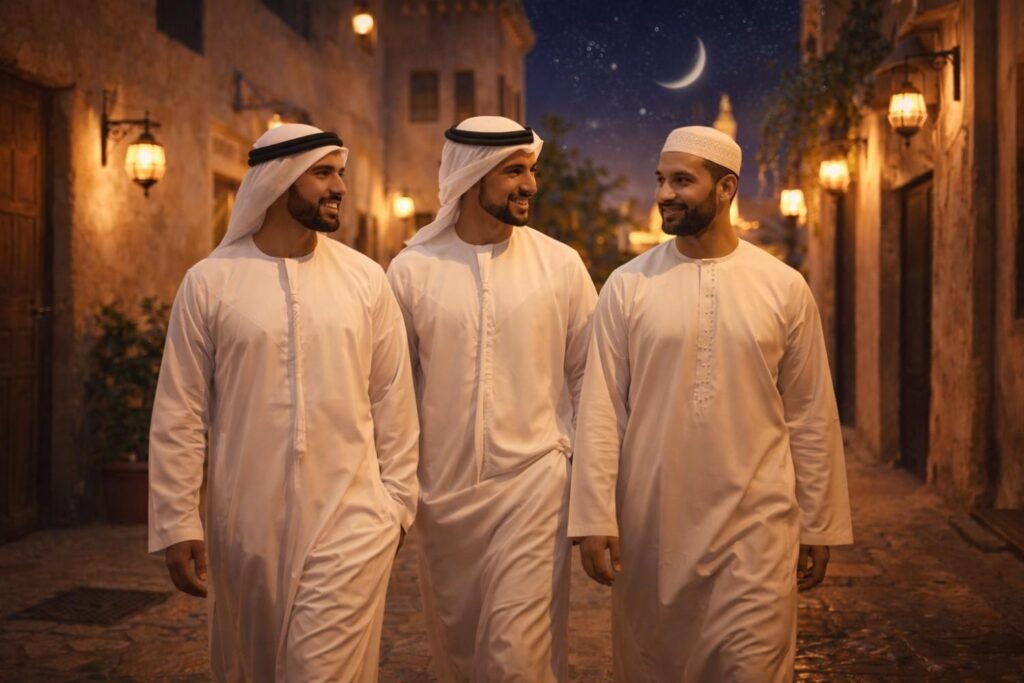
For public areas during the day: Opting for long trousers and shirts with sleeves is a considerate choice. Tank tops and sleeveless shirts should stay at the beach. Regular t-shirts work great. Polo shirts look smart. Button-down shirts with short sleeves are perfect for Dubai’s heat.
Shorts are the big question for men. Knee-length shorts work in most places during Ramadan. Very short shorts that show a lot of thigh should be avoided in malls and souks. When in doubt, wear pants.
For beaches and casual settings: Board shorts and swim trunks are fine at pools and beaches. Tank tops work at beach clubs and hotel pool areas. You can relax the coverage rules in these specific locations.
Walking around shirtless is never okay anywhere except actual beaches and pools. Put a shirt on when you leave those areas. Hotel lobbies, elevators, and restaurants all require shirts.
For evening and nighttime: After sunset, dress codes relax slightly. You still need to cover shoulders and knees in most public spaces, but the enforcement becomes less strict. Hotel bars and restaurants allow more casual clothing in the evening.
Smart casual works well for evening activities. Jeans or chinos with a nice shirt will get you into most venues. Dubai appreciates good presentation regardless of the season.
What About Kids and Teenagers
Young children get more flexibility with dress codes during Ramadan. Toddlers and small kids can wear weather-appropriate clothing without strict modesty requirements. Parents shouldn’t worry too much about covering a five-year-old’s shoulders.
Teenagers should follow adult dress code guidelines. Once kids hit their teen years, the same rules about covering shoulders and knees apply. It shows respect and helps them understand cultural awareness.
Babies and toddlers can wear whatever keeps them comfortable. Nobody expects you to dress a two-year-old in full coverage during Dubai’s heat. Common sense applies here.
The Beach Club Exception
Beach clubs create an interesting situation during Ramadan. Many close completely or restrict access during the holy month. Those that stay open typically allow normal beach attire within their boundaries.
Once you’re inside a beach club property, regular swimwear rules apply. The key is getting there appropriately dressed. Wear a cover-up until you’re in the beach club area. Then you can dress down to your swimsuit.
Some beach clubs go alcohol-free during Ramadan. Others close entirely during daylight hours. Check specific venue policies before planning your beach day.
Common Dress Code Myths Debunked
Myth: Women must wear abayas during Ramadan. False. Wearing an abaya is not compulsory for tourists. Your own modest clothing works perfectly fine. Abayas are traditional garments for Muslim women, not requirements for visitors.
Myth: You can’t wear any shorts during Ramadan. False for tourists. Longer shorts that approach or cover the knee work in many situations. The key is they shouldn’t be very short or revealing.
Myth: Bright colors are forbidden during Ramadan. False. Color doesn’t matter. Modesty of coverage matters. Wear whatever colors you like as long as the outfit covers appropriately.
Myth: Dress codes are strictly enforced with heavy fines. Mostly false. Dubai doesn’t have dress code police waiting to fine tourists. Enforcement focuses on extremely inappropriate clothing. Following basic modest dress prevents any issues.
Myth: After sunset, anything goes. False. Modest dress remains important throughout Ramadan, day and night. Evening hours offer slightly more flexibility, but public decency rules still apply.
What Actually Gets You in Trouble
Let’s talk about real enforcement. Dubai police rarely target tourists for minor dress code issues. They’re not measuring your skirt length with rulers or counting how many inches of shoulder you’re showing.
Extreme situations draw attention. Walking through Dubai Mall in a bikini top and tiny shorts will cause problems. Wearing see-through clothing in souks will too. Showing excessive skin in heritage areas definitely will.
Choose modest attire, especially in malls, souks and near places of worship. This guideline keeps you out of trouble. Most enforcement involves security guards politely asking people to cover up more. Actual fines or arrests happen rarely and only in egregious cases.
The goal is respect, not punishment. Following basic guidelines means you’ll never have a problem.
Practical Packing Tips for Ramadan Travel
Pack lightweight, breathable fabrics. Dubai’s heat doesn’t pause for Ramadan. Cotton, linen, and moisture-wicking materials keep you comfortable while staying covered.
Bring versatile pieces that cover shoulders and knees. One good midi dress can work for shopping, dining, and sightseeing. A light cardigan adds shoulder coverage to any sleeveless outfit.
Maxi dresses and skirts are your best friends during Ramadan. They’re cool, comfortable, and automatically modest. Pack at least two or three.
Men should bring several t-shirts and long shorts or pants. Lightweight chinos work well. Avoid packing only tank tops and very short shorts.
A light scarf serves multiple purposes for women. It covers shoulders when needed. It works as a mosque headcover. It blocks sun. It adds warmth in air-conditioned malls.
Comfortable walking shoes matter more than fashion. You’ll be covering more skin, so comfortable shoes become even more important. Skip heels for flats or supportive sandals.
Shopping for Clothes in Dubai During Ramadan
Forgot to pack appropriately? Dubai’s malls will solve your problem. The city sells everything you need to dress modestly.
Major malls like Dubai Mall, Mall of the Emirates, and City Walk have countless clothing stores. Fast fashion brands carry affordable modest options. Department stores offer choices at all price points.
Traditional souks sell beautiful local clothing if you want to embrace Emirati style. Gold Souk and surrounding areas have shops selling abayas, kaftans, and traditional garments. These make great souvenirs too.
Retail outlets across the city launch discounts during the holy month, making shopping more affordable during Ramadan. You might find better deals than usual if you need to buy additional clothing.
How Dress Codes Affect Your Activities
Desert safaris: Modest dress works better anyway for desert activities. Long, light pants protect from sun and sand. Covered shoulders prevent sunburn. Your Ramadan wardrobe naturally fits desert adventures.
Water parks: Check if your chosen water park is even open during Ramadan. Those that operate allow normal swimwear inside the park. Cover up for the journey there and back.
Museum and cultural visits: These experiences actually work better during Ramadan when you’re already dressing modestly. Heritage sites and museums welcome appropriately dressed visitors warmly.
Fine dining: Restaurants maintain dress codes year-round. During Ramadan, slightly more conservative choices show good judgment. Skip anything too revealing for evening restaurants.
Hotel lounging: Your hotel becomes your freedom zone. Dress however you want inside your hotel property, within reason. Pools and private areas allow typical resort wear.
A Reality Check on Enforcement
Appropriate dress standards must be observed in public areas, more stringently enforced than usual during Ramadan. But let’s be honest about what “more stringent” means.
You’ll see tourists wearing sleeveless tops in malls during Ramadan. Nobody arrests them. You’ll see men in shorts. Nobody throws them out. The difference is more about social expectation than legal enforcement.
That said, pushing boundaries during Ramadan shows poor judgment. When locals are fasting and making sacrifices, visitors can make small wardrobe adjustments. It’s not asking much to cover shoulders and knees for a few weeks.
The Evening Shift
After iftar when Muslims break their fast, Dubai’s energy changes. Dress codes relax slightly, though they don’t disappear. You’ll see more variety in clothing choices after sunset.
Hotel restaurants and bars allow dressier, less conservative outfits in the evening. A nice dress with bare shoulders works at your hotel bar after 8pm. Men can wear shorts to casual evening venues.
Public areas like malls still expect modest dress even after dark during Ramadan. The religious significance doesn’t end at sunset. Keep this in mind when planning evening shopping trips.
Your Ramadan Wardrobe Checklist
Here’s what should be in your suitcase:
Women:
- 3-4 maxi or midi dresses
- 2-3 pairs of long pants or palazzo pants
- 2-3 tops with sleeves (t-shirts, blouses)
- 1 light cardigan or kimono for shoulder coverage
- 1 lightweight scarf for multiple uses
- Comfortable walking sandals or sneakers
- Swimwear plus a cover-up
- One modest evening outfit
Men:
- 4-5 t-shirts or polo shirts with sleeves
- 2-3 pairs of long shorts (knee-length)
- 1-2 pairs of lightweight pants
- Comfortable walking shoes or sneakers
- Swim trunks
- Tank tops only for beach/pool
- One smart casual evening outfit
Final Thoughts on Dressing for Ramadan
Here’s the honest truth about dress codes during Ramadan in Dubai. They’re stricter than normal Dubai. They’re not as scary as rumors suggest. Following basic modest dress guidelines keeps you comfortable and respectful.
You don’t need a completely new wardrobe. Most people traveling to warm destinations already pack clothes that work for Ramadan. Add sleeve coverage. Check that shorts and skirts hit near the knee. You’re basically done.
The beach vacation you planned still happens. The shopping still happens. The sightseeing still happens. You just wear slightly different clothes while doing it.
Ramadan dress codes exist for good reason. They honor a sacred time for millions of people. Respecting that through modest dress choices costs you nothing but shows cultural awareness and consideration.
Pack smart. Dress appropriately. Enjoy your trip. Dubai during Ramadan offers unique experiences you won’t find any other time of year. Your wardrobe choices shouldn’t stop you from experiencing them.





2 thoughts on “What to Wear in Dubai During Ramadan: Complete Dress Code Guide for Tourists”