
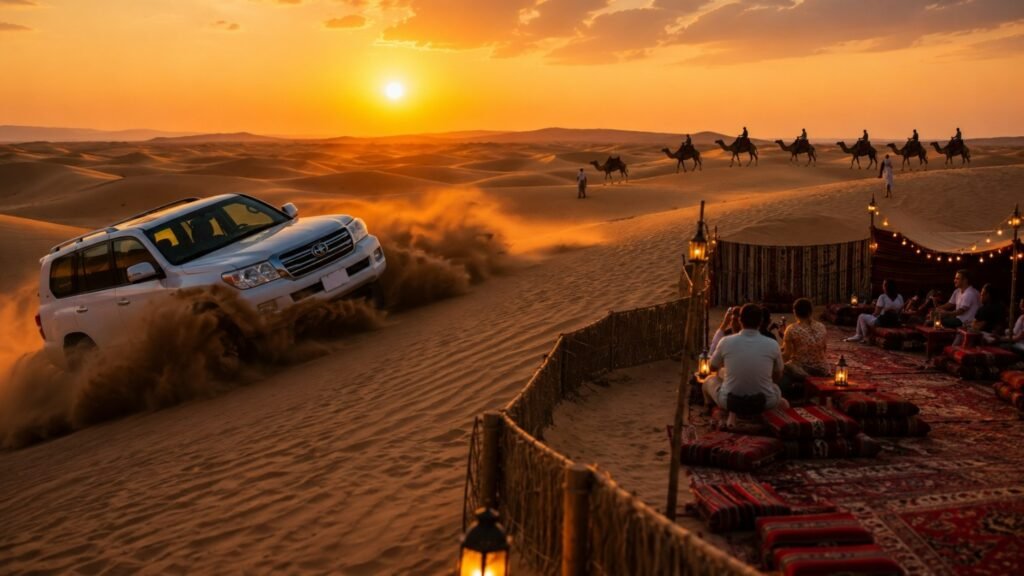
Every second travel blog about Dubai has the same desert safari post. Same photos of a Land Cruiser mid-dune, same “book now” links, same five-star praise. What barely anyone talks about is what actually happens between pickup and drop-off, and whether it’s worth the hype or just another tourist trap dressed up in gold filters.
This one skips the sales pitch.
What a Desert Safari Actually Involves
A standard evening desert safari in Dubai runs for about 6 hours and follows a set pattern almost every operator uses, whether it costs 60 AED or 300 AED per person.
The rough timeline:
- Pickup from your hotel between 3:00 and 3:30 PM
- Drive to the desert conservation area, roughly 45 minutes to an hour
- Dune bashing for 20 to 40 minutes
- Stop at a desert camp for sunset photos, camel rides, and sandboarding
- BBQ dinner buffet with live entertainment (belly dance, tanoura, fire show)
- Drop-off back at the hotel around 9:30 to 10:00 PM
That’s the skeleton. Everything else, the quad biking, the falconry photo, the henna stall, gets bolted on depending on the package.
The Good Part Nobody Oversells Enough
Dune bashing genuinely surprises people. Most expect a bumpy jeep ride. What they get is a driver flinging a 4×4 sideways down a 50 degree slope at speed, and it feels closer to a theme park ride than a scenic drive. If the driver is skilled (and most licensed ones are), it’s the single best 30 minutes of the whole package.
The sunset over the dunes is also not exaggerated. Photos genuinely don’t do it justice. The sand shifts through orange, pink, and a deep red that only shows up for about 12 to 15 minutes right before the sun drops. If timing lines up, this alone makes the trip worth it.
The Bad Parts That Rarely Make It Into Reviews
The food is average at best. Buffet dinners at desert camps are mass catered for hundreds of people a night. Expect lukewarm curries, dry grilled chicken, and hummus that tastes like it came from a bulk tub. Vegetarian options exist but are limited and repetitive across almost every operator.
The camp feels crowded, not remote. Marketing photos show empty dunes and a lone camp glowing at dusk. Reality is dozens of camps sitting close together in the same conservation zone, with the sound of quad bikes and other groups’ music bleeding into your own experience.
Dune bashing can genuinely make people sick. Anyone prone to motion sickness should eat light beforehand and mention it to the driver. It’s common enough that most camps keep sick bags in the vehicles, though nobody mentions this until it’s needed.
Photography is aggressively upsold. Camps often have “professional photographers” roaming around who take photos on camel rides or at the fire show, then try to sell printed copies or digital packages afterward. It’s not mandatory, but the pressure is real.
The Overhyped Bits
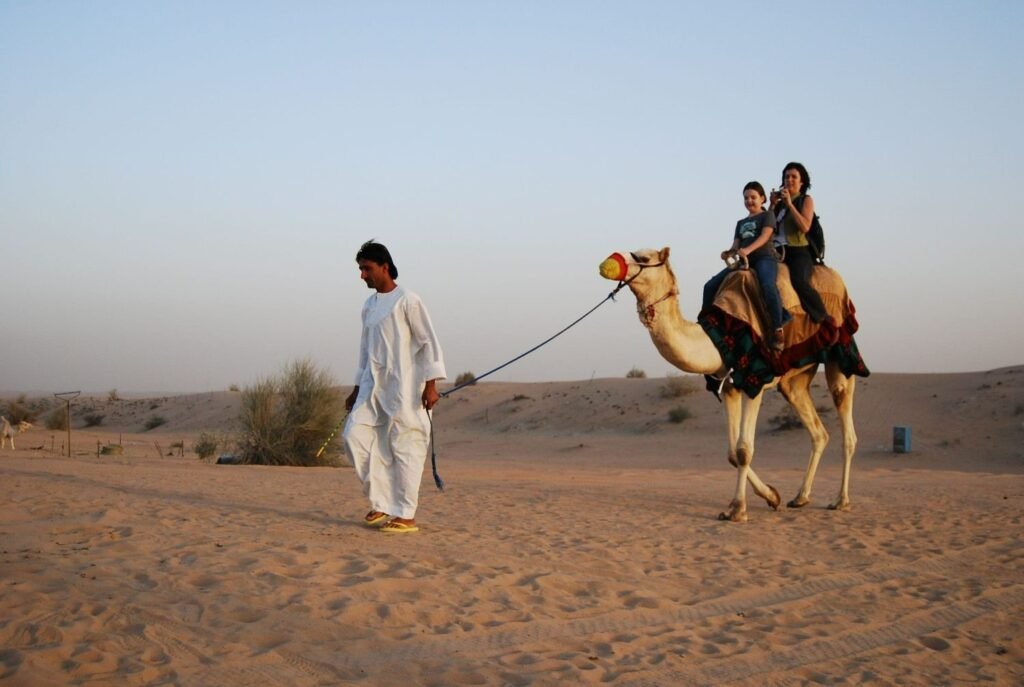
Camel riding sounds romantic in every ad. In practice it’s a 3 to 5 minute walk in a slow-moving line, more of a photo op than an experience. Fun once, not worth building expectations around.
The “Bedouin culture” framing gets stretched thin. Most camps are built for volume tourism rather than authenticity, with entertainment acts that are more generic Middle Eastern variety show than specific Emirati tradition. That’s not necessarily bad, but it’s worth knowing going in so nobody feels misled.
Sandboarding is fun for about ten minutes, then it’s mostly walking back up a dune in loose sand, which is exhausting. Great for one or two runs, not the highlight it’s often made out to be.
What Actually Separates a Good Operator From a Bad One
Since almost every safari follows the same format, the real difference comes down to three things:
- Group size in the vehicle. Shared safaris cram 6 people into a Land Cruiser. Private ones cost more but mean more legroom and a driver who isn’t rushing between five pickups.
- Camp size and setup. Smaller, less crowded camps (sometimes marketed as “VIP” or “premium”) tend to have better food, quieter surroundings, and shorter queues for activities.
- Driver experience. This affects both safety and enjoyment. Licensed drivers with the Dubai desert conservation authority tend to bash dunes more skillfully and safely than budget operators cutting corners.
Checking recent reviews (not just star ratings, actual written reviews from the last month) matters more than the price tag when picking a company.
Morning vs Evening Safari: The Comparison Nobody Explains Well
Most tourists default to the evening safari because it’s the most advertised, but the morning version deserves more attention.
| Factor | Morning Safari | Evening Safari |
|---|---|---|
| Duration | 3 to 4 hours | 6 hours |
| Crowd level | Lower | Higher |
| Temperature | Cooler, more comfortable | Hot until sunset |
| Sunset views | No | Yes |
| Dinner included | No | Yes |
| Price | Usually cheaper | Higher |
| Best for | Adventure activities, fewer crowds | Photos, full experience |
Morning safaris skip the dinner and entertainment but often include more time for quad biking and sandboarding without the queues that build up in the evening rush.
Safety and Booking Tips Worth Knowing
- Confirm the tour operator is licensed by Dubai’s Department of Tourism and Commerce Marketing (DTCM). Unlicensed operators are cheaper but cut corners on vehicle maintenance and driver training.
- Avoid booking through random street vendors or hotel lobby touts offering “special today only” prices. Most are middlemen adding a markup for a commission.
- Pregnant travelers, people with back or neck issues, and young children under 3 are usually advised against dune bashing due to the intensity of the ride.
- Motion sickness tablets, taken about an hour before, help more than people expect.
- Bring a light jacket even in summer. Desert temperatures drop noticeably after sunset.
Alternatives Worth Considering
For anyone who wants something less templated than the standard package:
- Overnight desert camping with stargazing, away from the tourist camps, gives a genuinely quieter experience
- Hot air balloon rides at sunrise cover the desert landscape without the crowd noise
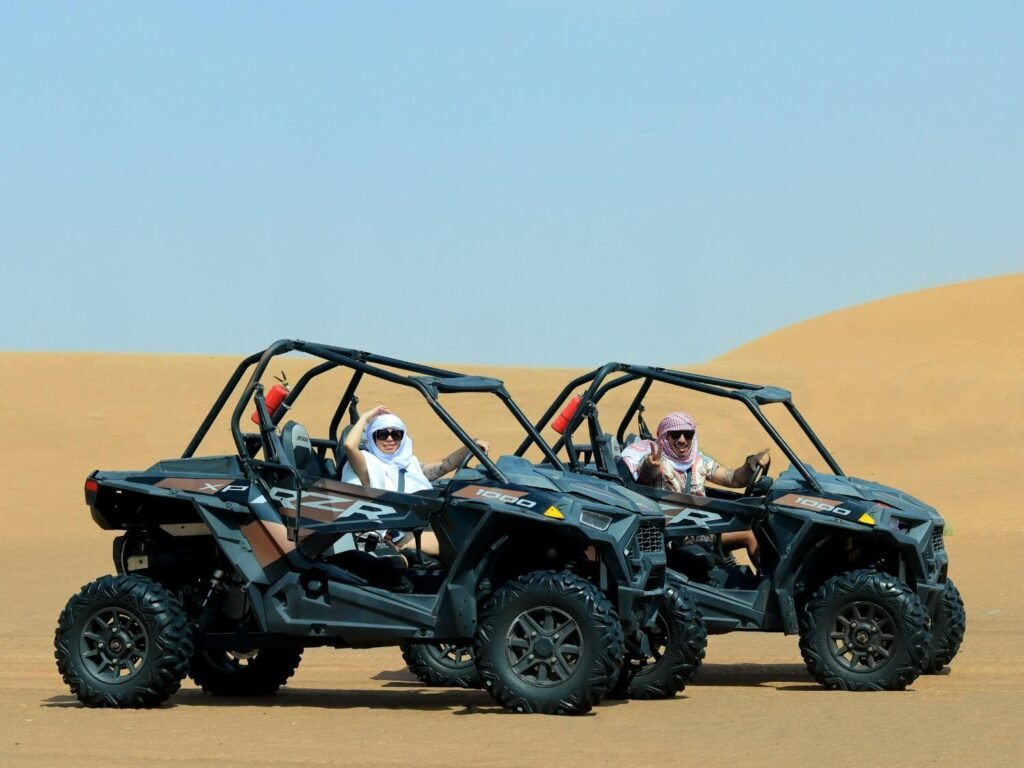
- Off-road self-drive dune buggy tours for people who want control instead of a driver doing the bashing
These cost more but solve most of the complaints regular safari-goers have about crowding and repetitiveness.
Is It Worth Doing At All?
For a first Dubai trip, yes. Dune bashing and the sunset alone justify the experience once. For repeat visitors or anyone who’s already done it, the standard evening safari starts to feel formulaic fast, and one of the alternatives above is a better use of time and money the second time around.
The honest takeaway: it’s a solid, memorable few hours, not the once-in-a-lifetime spectacle the marketing photos suggest. Going in with realistic expectations is what actually makes it enjoyable.