
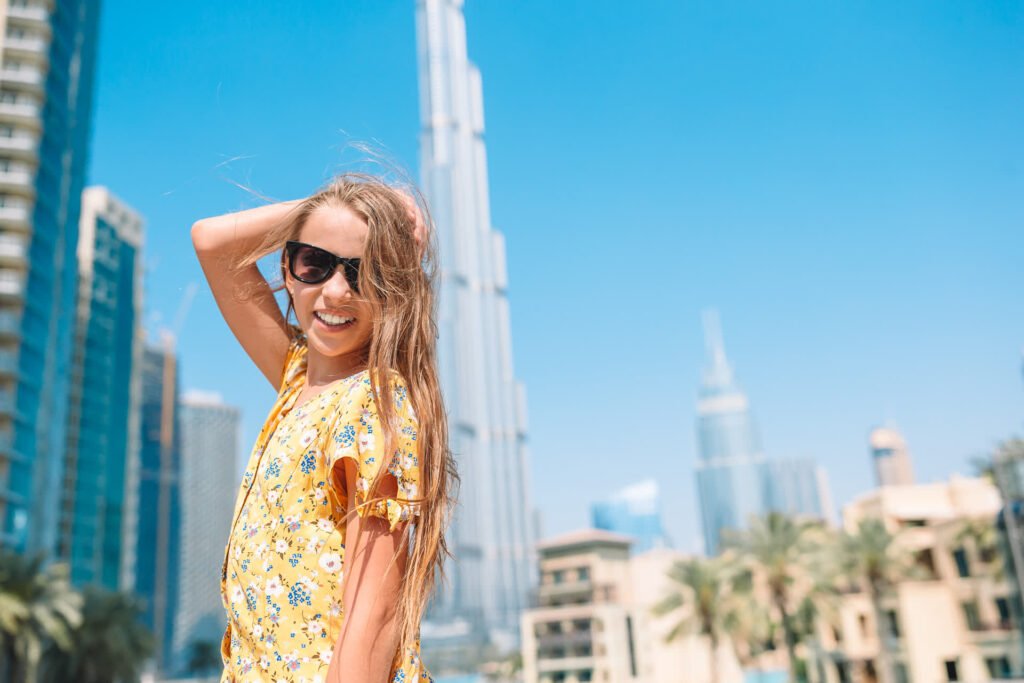
Most people land in Dubai with one image in their head.
The Burj Khalifa. Tall, shiny, unmissable.
And yes, it is worth seeing. But if that is all you see, you have missed the point of Dubai entirely.
Dubai is a city that was desert fifty years ago. Today it holds some of the most ambitious, most beautiful, and most unexpected places on the planet. From ancient souks that smell of frankincense to man-made islands you can see from space, this city does not do anything quietly.
I have broken down the most beautiful places to visit in Dubai by experience so you can plan better, travel smarter, and actually enjoy every moment instead of rushing from one Instagram spot to the next.
Let us get into it.
Start With Old Dubai. Most Tourists Skip It. Do Not Make That Mistake.
Before the skyscrapers, there was the creek.
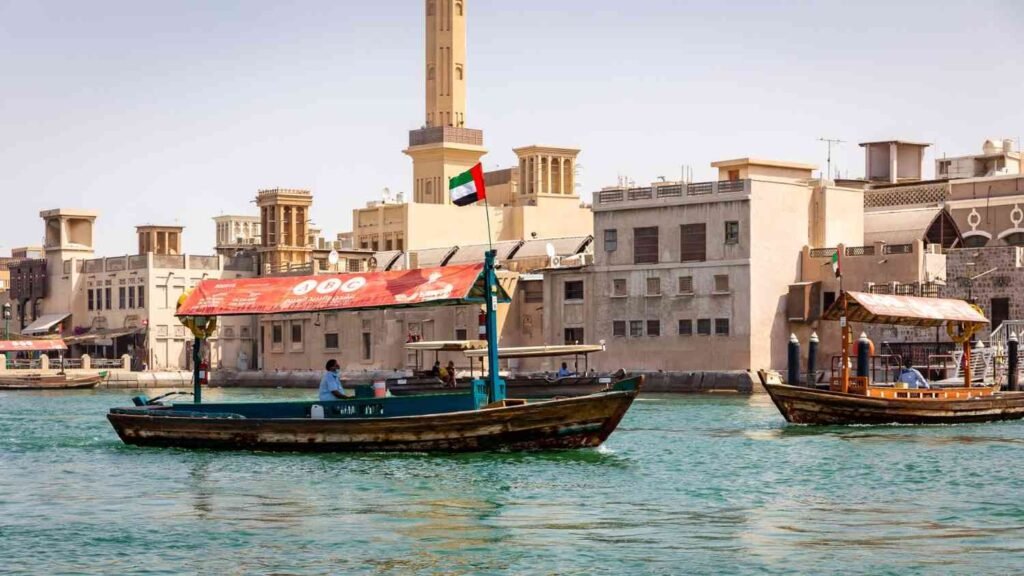
Dubai Creek is the original heart of this city. It is a natural saltwater inlet that splits Dubai into two sides: Deira on the north and Bur Dubai on the south. Merchants traded here for centuries. Pearl divers set off from these shores. Everything that Dubai became started right here on this waterway.
What to do here:
Take an Abra. This is a traditional wooden boat that ferries passengers across the creek for just one dirham. One dirham. It is the cheapest and most authentic experience in all of Dubai and most visitors never even know it exists. The ride takes about five minutes but the view of the old city from the water is something you will not forget easily.
After crossing, walk into the Al Fahidi Historical Neighbourhood. This is one of the oldest surviving parts of Dubai. The buildings are made of coral stone and gypsum. The wind towers on top of each structure were the original air conditioning, designed to catch the breeze and cool the rooms below. The lanes are narrow and quiet. It feels nothing like the rest of the city and that is exactly the point.
Inside Al Fahidi, you will find the Dubai Museum housed inside Al Fahidi Fort, which was built in 1787. Entry costs just three dirhams. The museum walks you through what Dubai looked like before the oil era. Simple fishing villages. Pearl diving boats. Desert life. It is humbling to stand there and think about how much changed in just five decades.
The Gold Souk and Spice Souk: A Full Sensory Experience
A short walk from Al Fahidi takes you to two of Dubai’s most famous traditional markets.
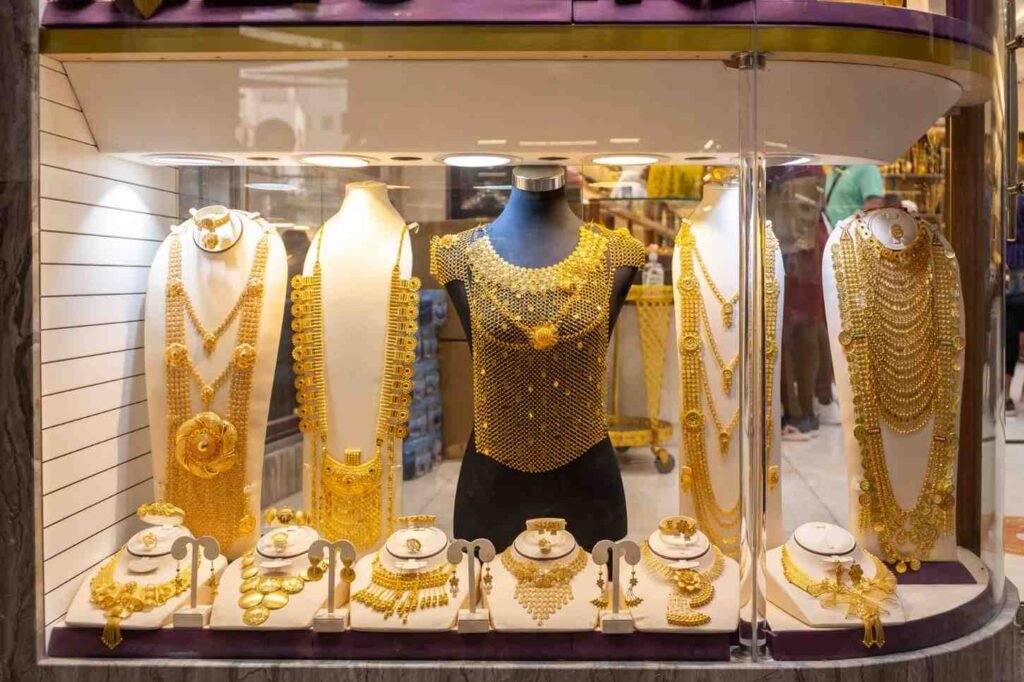
The Gold Souk in Deira is the largest gold market in the world. The numbers are staggering. Over 300 retailers. Tonnes of gold on display at any given moment. Necklaces, bangles, rings, and pieces so large you wonder who actually wears them. You do not have to buy anything. Walking through is an experience on its own.
The Spice Souk sits nearby and is completely different in atmosphere. The smells hit you before you even walk in. Saffron, dried lemon, rose petals, frankincense, cardamom, and dozens of spices you may not recognise. Vendors are friendly and will usually let you smell and touch before you buy. Prices are reasonable and bargaining is expected.
Together these two souks give you a Dubai that most tourists rush past on their way to the mall.
The Burj Khalifa: Yes, You Should Go. But Do It Right.
At 828 metres tall, the Burj Khalifa is the tallest building in the world. There is no debate there.
But visiting it wrong is very easy to do.
Here is what most people do: they book a daytime ticket, go up, take a photo, and come back down. It is fine. The view is great. But it is not the best version of the experience.
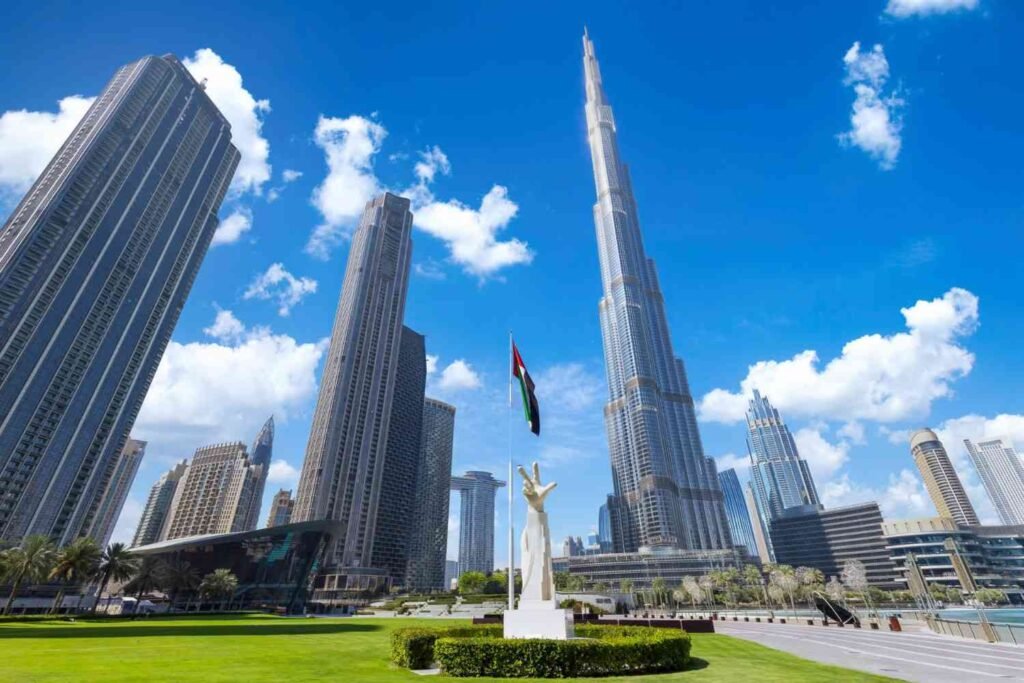
Book the At the Top SKY experience on Level 148 at sunset. The city changes colour as the sun drops. The desert on one side, the Gulf on the other, and 200 kilometres of visibility when the sky is clear. That is the Burj Khalifa experience worth having.
Book tickets online in advance. Walk-in tickets cost significantly more and sometimes are not available at all.
Right below the tower is the Dubai Fountain, the largest choreographed fountain system in the world. Shows run every thirty minutes after sunset. They are free to watch from the waterfront. The combination of music, water, and the Burj Khalifa lit up behind it is genuinely spectacular.
Dubai Mall: More Than Just Shopping
Speaking of what sits beside the Burj Khalifa, the Dubai Mall deserves its own mention.
It is not just a shopping mall. It is the most visited building on Earth, receiving more visitors annually than the Eiffel Tower or Times Square.
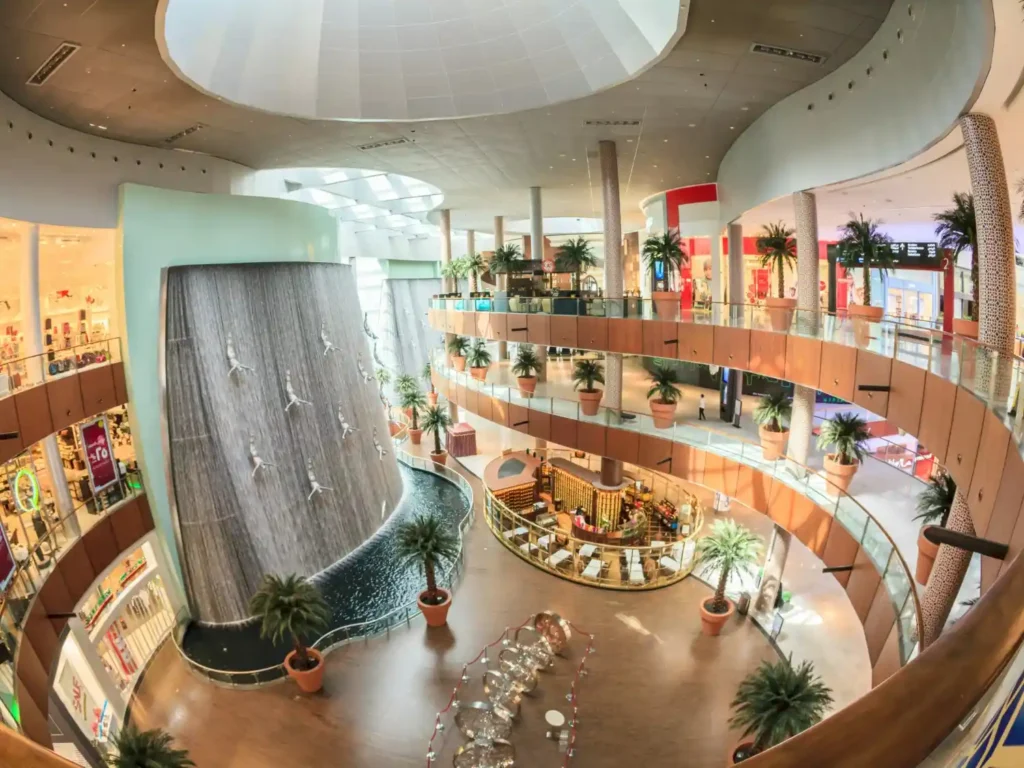
Inside you will find the Dubai Aquarium and Underwater Zoo, which holds one of the largest acrylic panels in the world and houses over 33,000 aquatic animals. There is an Olympic-sized ice skating rink. A VR park. A dinosaur skeleton standing in the main atrium. A waterfall feature four storeys tall with human divers.
Even if you do not shop, budget two to three hours here just to explore.
Palm Jumeirah: The Island That Should Not Exist
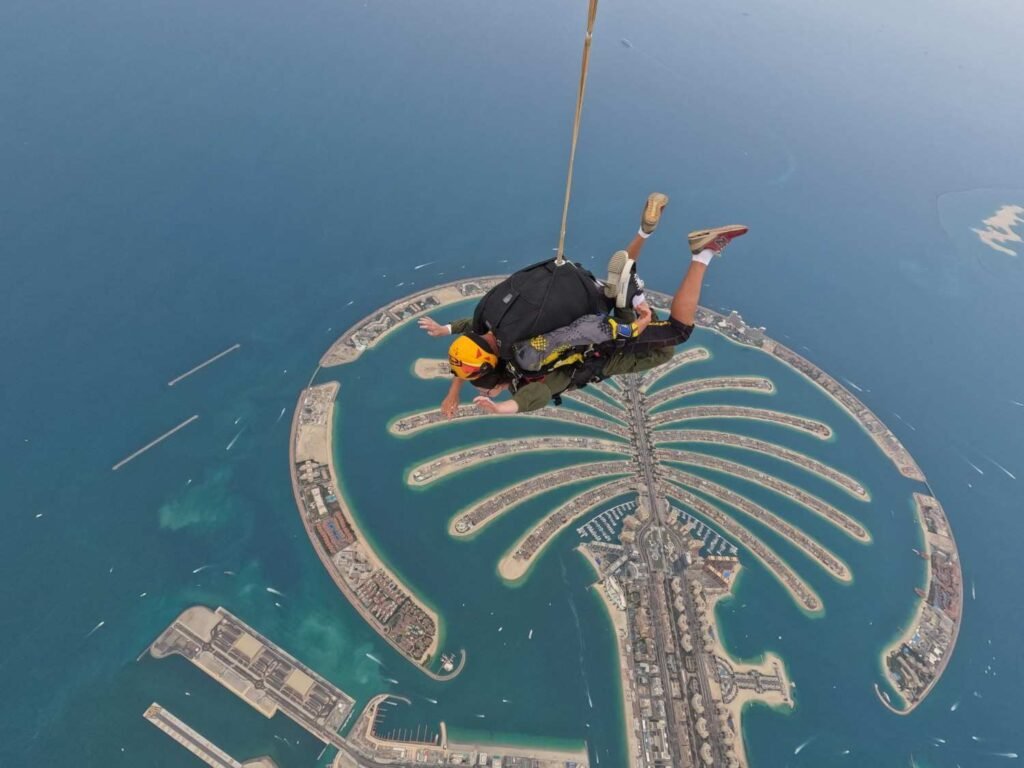
From above, Palm Jumeirah looks like a palm tree drawn into the sea.
From ground level, it is a neighbourhood unlike any other.
The Palm was entirely man-made. Over 100 million cubic metres of sand and rock were used to build it. It stretches five kilometres into the Arabian Gulf and added 520 kilometres of new coastline to Dubai. The engineering alone is worth reading about before you visit.
What to do there:
Take the Palm Monorail from the Gateway station all the way to Atlantis The Palm at the top. The views from the monorail over the water are genuinely beautiful. Atlantis itself is worth walking through even if you are not staying there. The lobby is dramatic, the aquarium is impressive, and the restaurants range from casual to world-class.
For the best view of the entire Palm from above, book a ticket to The View at The Palm on Level 52 of the Palm Tower. On a clear day you can see the entire island laid out below you, the Dubai Marina skyline behind it, and the Gulf stretching to the horizon. It is one of the most beautiful places to visit in Dubai and one of the least crowded viewing platforms in the city.
Dubai Marina: The City Within the City
Dubai Marina was built from scratch in the early 2000s. It is an artificial canal city that stretches three kilometres along the coast and is lined with some of the tallest residential towers in the world.
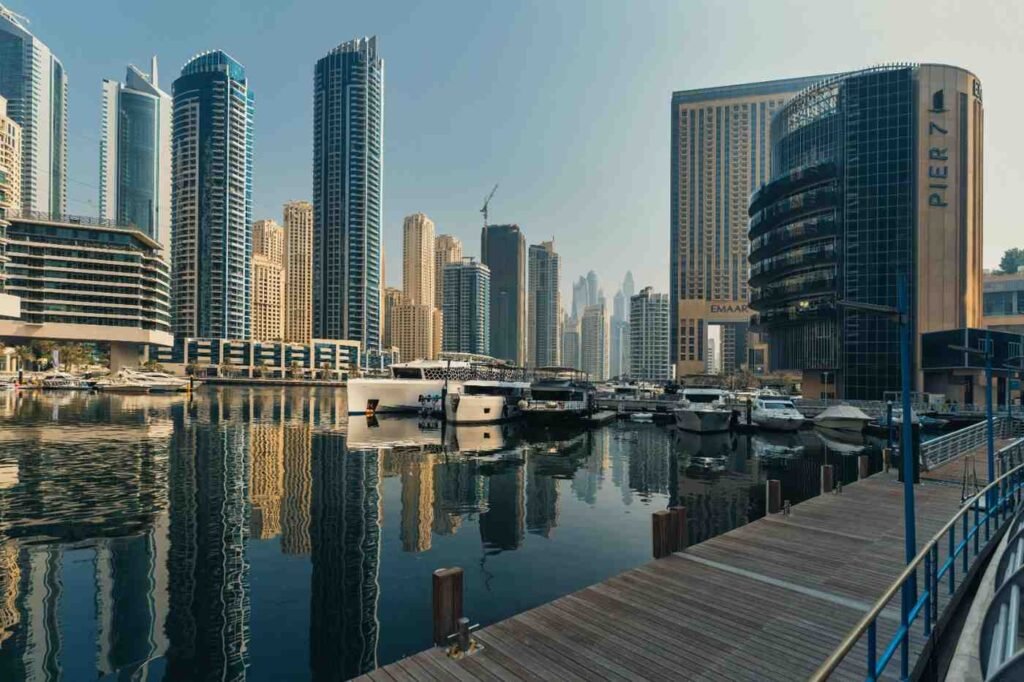
The Marina Walk is a 7-kilometre waterfront promenade. It is excellent for an evening walk. Restaurants, cafes, and juice bars line the path. Boats and yachts are moored along the water. The towers reflect in the canal below. It is lively without being overwhelming.
From the Marina, you can book a 90-minute dhow cruise. Traditional wooden dhows take you along the coastline past the Palm Jumeirah with dinner included. The views of the Marina skyline from the water at night are worth every dirham.
JBR, which stands for Jumeirah Beach Residence, is a short walk from the Marina. It is an open-air beach destination with a 1.7-kilometre stretch of public beach, a boardwalk called The Beach, and easy access to water sports. On weekends it gets busy but the energy is good.
Miracle Garden: 150 Million Flowers in the Desert
This one surprises almost everyone who visits.
The Dubai Miracle Garden is the world’s largest natural flower garden. It covers 72,000 square metres and contains over 150 million flowers arranged into sculptures, arches, walls, and structures.
There is a full-scale Emirates A380 aircraft covered entirely in flowers. There are Disney character sculptures, heart-shaped arches, and floral castles. It sounds over the top because it is. And it is wonderful.
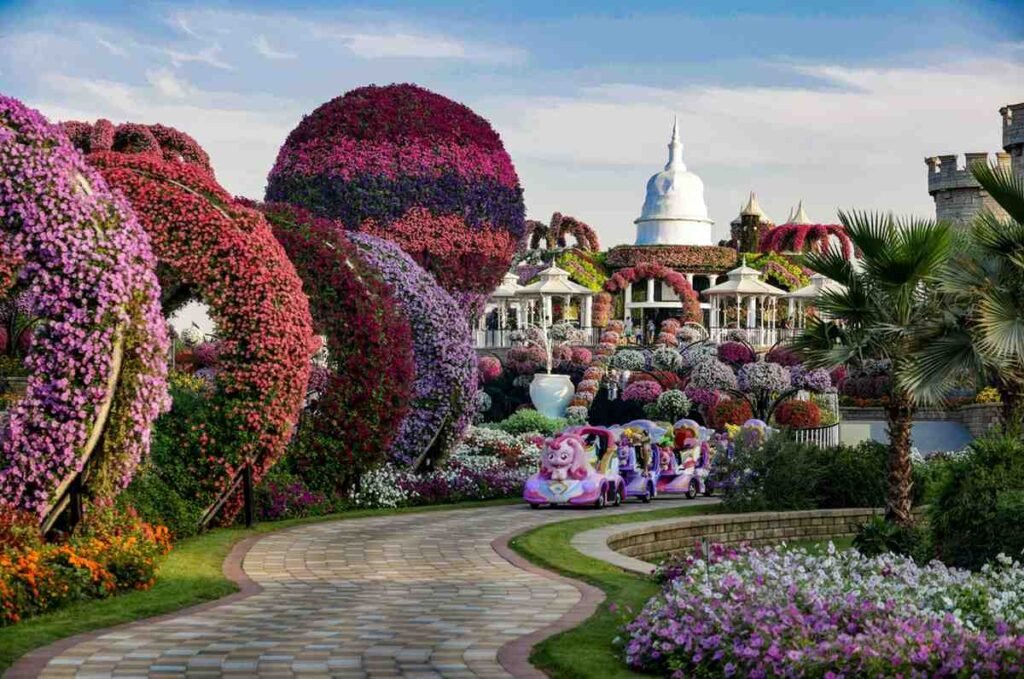
The garden is open only during the cooler months, typically from October to May. If you are visiting during that window, do not skip it. It is genuinely unlike anything else in the world.
Entry is around 55 dirhams for adults. Go in the morning to avoid the afternoon crowds.
The Desert: The Experience That Puts Everything in Perspective
You cannot visit Dubai and not go to the desert.
The city rises out of the sand and when you drive even thirty minutes outside the city limits, that reality becomes very clear. The desert here is not flat and empty. The red dunes outside Dubai, particularly in the Al Qudra area and towards the Hatta region, are tall, rolling, and genuinely beautiful.
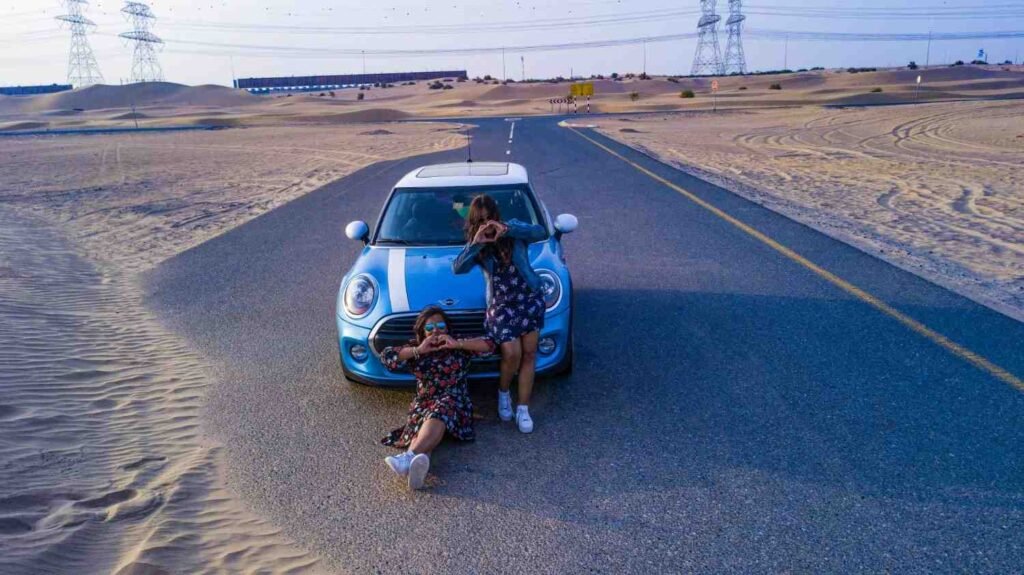
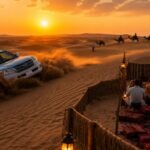
Book a desert safari through a reputable operator. The standard experience includes dune bashing in a 4×4, sandboarding, a camel ride, and a barbecue dinner under the stars in a Bedouin-style camp. It takes about six hours and covers the full experience from golden hour in the dunes to dinner by firelight.
If you want something more peaceful, visit the Al Qudra Lakes in the early morning. These artificial lakes in the middle of the desert have become a habitat for flamingos and over 170 species of birds. Watching flamingos stand in calm water with sand dunes behind them is an image that stays with you.
Hatta: The Hidden Gem Most Tourists Never Reach
About 130 kilometres from central Dubai, tucked into the Hajar Mountains, is Hatta.
It is technically still part of Dubai emirate and it feels like a completely different world. The mountain landscape is rugged and dramatic. The Hatta Dam sits in a valley surrounded by rust-coloured peaks and the turquoise water of the reservoir is striking against the dry rocky backdrop.
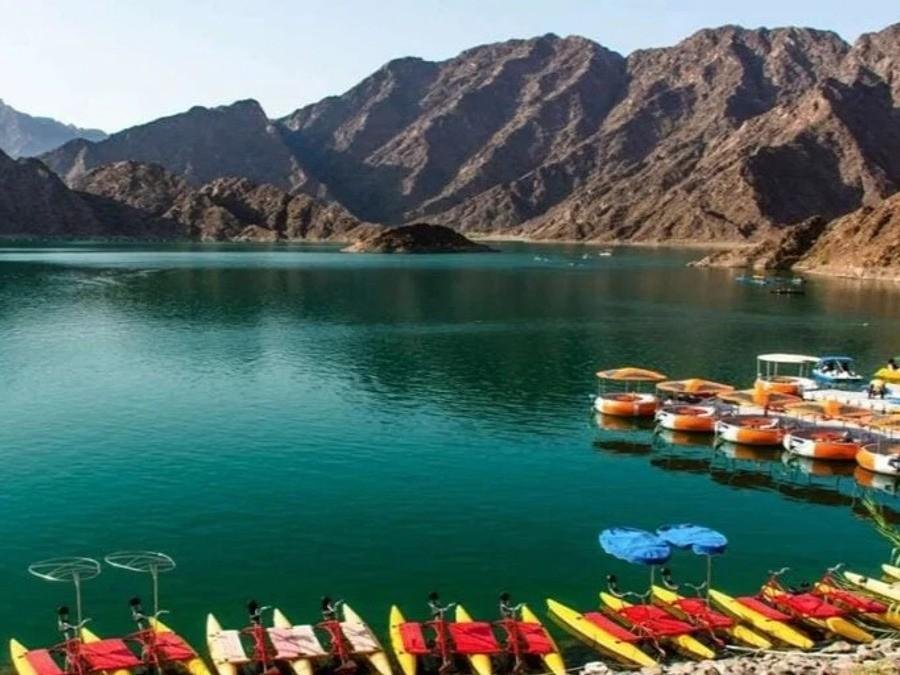
Activities here include kayaking on the dam, mountain biking on trails that wind through the hills, and hiking. There is also a heritage village in Hatta that shows how mountain communities lived centuries ago.
If you have more than three days in Dubai, Hatta is absolutely worth the drive.
Practical Tips Before You Go
Dubai is one of the safest cities in the world for travellers. Public transport is excellent and the Metro connects most major attractions. Still, a few things to know:
The best time to visit is between November and March when temperatures are comfortable. Summers are extremely hot, often crossing 45 degrees Celsius, though indoor attractions remain fully operational year-round.
Dress modestly in traditional areas like the souks and mosques. In malls, beaches, and modern attractions, the dress code is much more relaxed.
The currency is the UAE Dirham. Most places accept cards but carry some cash for souks and abra rides.
Tipping is not mandatory but appreciated. Ten percent at restaurants is standard.
Final Thought
Dubai rewards curiosity.
The travellers who only see the towers and the malls leave with half a story. The ones who take the abra across the creek, walk the spice souk at dusk, watch the fountain show, drive into the desert, and find their way to Hatta come back with something much richer.
There are so many places to visit in Dubai that go far beyond what ends up on social media. The city has layers and each one is worth your time.
Plan well, move at your own pace, and let Dubai surprise you.
It will.

I’ve always wanted to visit Dubai. Did you get to see any of those places firsthand?